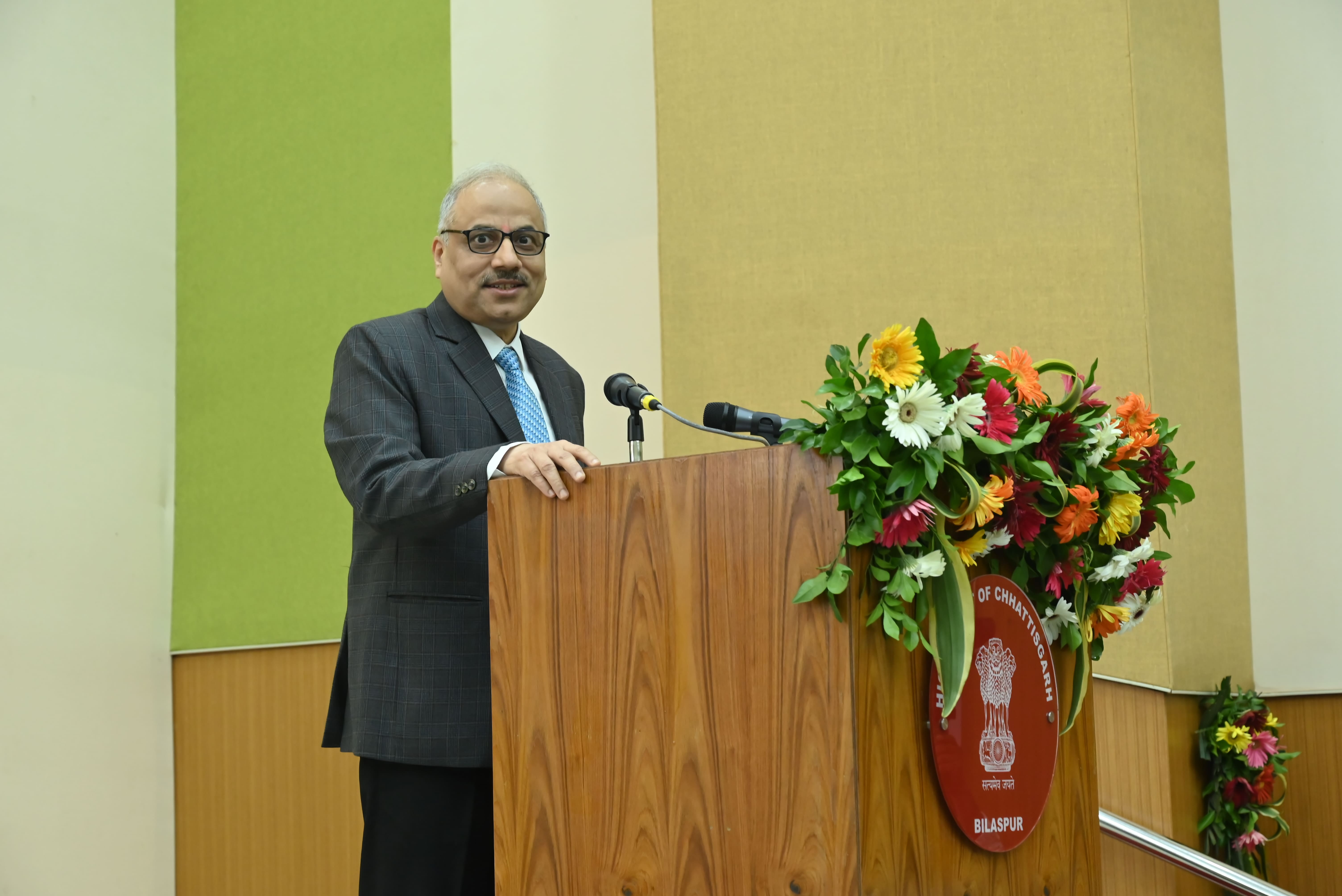
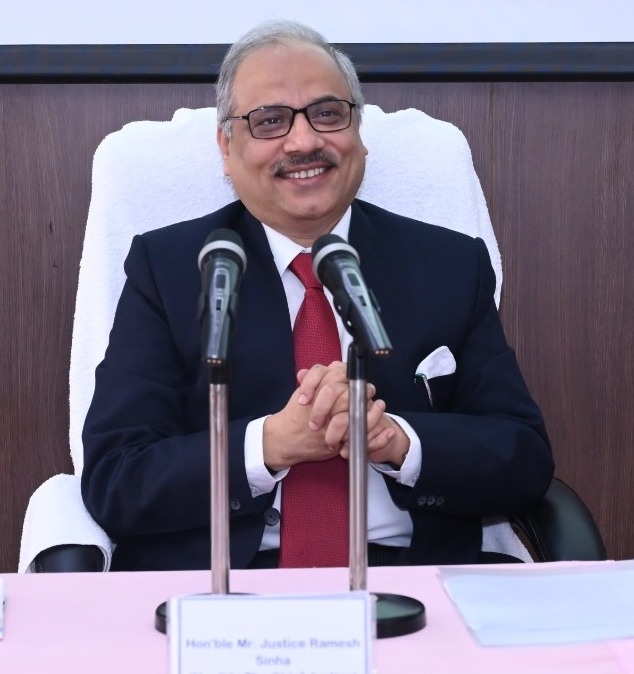
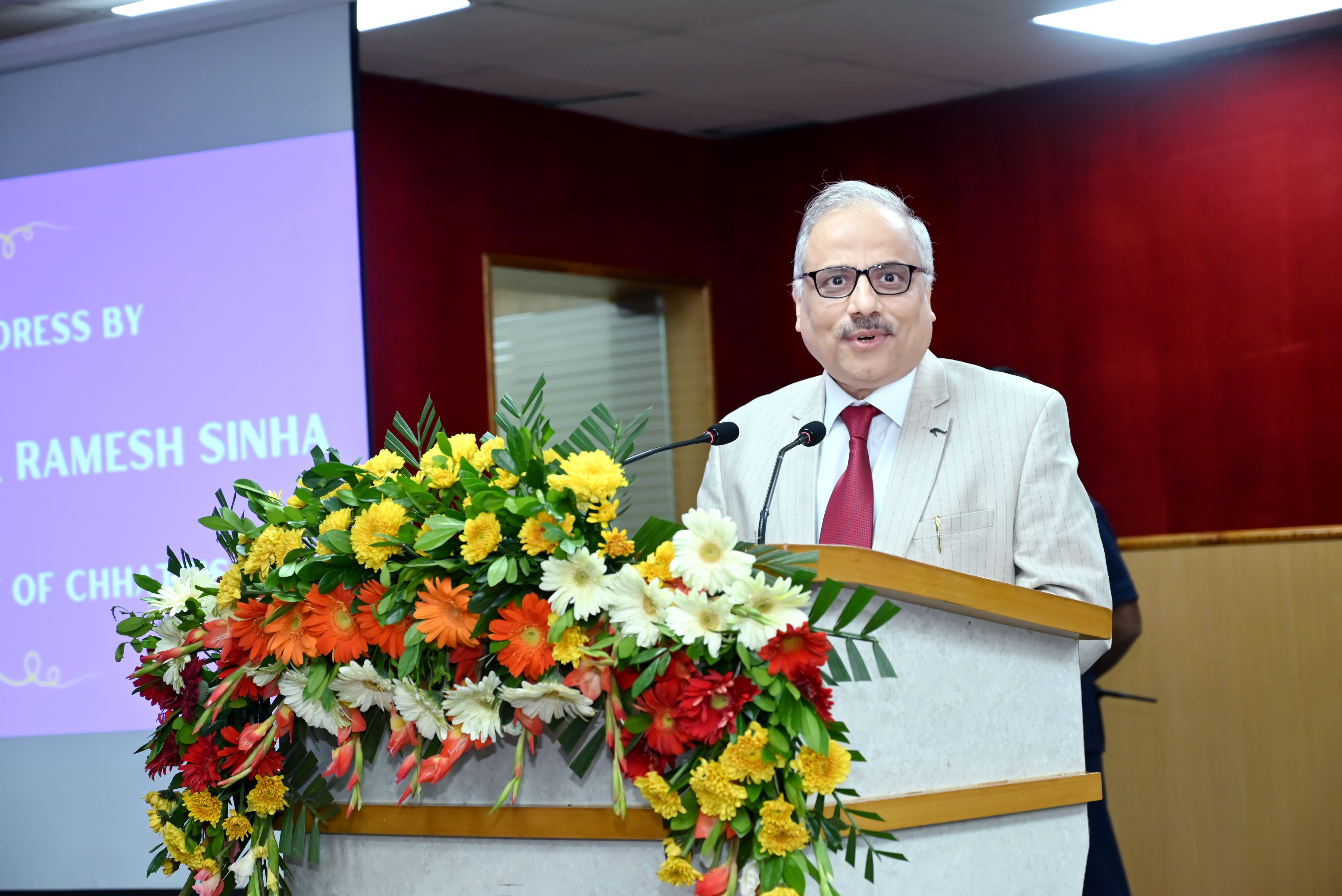
Hon'ble The Chief Justice

(Hon'ble The Chief Justice)
1. Notice No. 94, Provisional Gradation List upto 01.04.2026.
2. Notification No. 7272 /S&A Cell /2026 Bilaspur, dated 15/04/2026.
3. SUPPLEMENTARY CONSTITUTION OF BENCHES AT HIGH COURT OF CHHATTISGARH, BILASPUR W.E.F. 20/04/2026.
4. Notification No. 6878/Checker Bilaspur, Dated 09/04/2026
5. Order No. 52 (App.) Bilaspur, dated 09/04/2026
6. Endt. No. 6798 Bilaspur, Dated 08/04/2026
7. Notification No. 281/Confdl./2026 Bilaspur dated 08/04/2026
8. Order No. 279 /Confdl./2026 Bilaspur dated 08/04/2026
9. Order No. 277 /Confdl./2026 Bilaspur dated 08/04/2026
10. Notice for Recruitment to the Post of Junior Judicial Assistant (Computer).
1. Non-compliance with Section 52-A of the Narcotic Drugs And Psychotropic Substances Act, 1985 does not automatically invalidate the prosecution’s case. A conviction can still be sustained if the evidence on record convincingly proves the recovery and possession of contraband.
2. Mere procedural modification uniformly applied to all candidates does not vitiate the selection in the absence of demonstrated prejudice, and a challenge to the recruitment process after unsuccessful participation, without impleading the selected candidates, is not maintainable.
3. Participation in a tender process does not confer any vested or enforceable right to claim award of contract in the absence of a concluded agreement. A tendering authority is entitled to cancel the process in furtherance of a bona fide policy decision taken in public interest, and such action is not open to judicial interference unless found to be arbitrary, mala fide, or contrary to statutory provisions. Judicial review under Article 226 is confined to examining the decision- making process and not the merits of administrative or policy decisions.
4. The dying declaration can be the sole basis for
recording conviction and if it is found reliable and trustworthy,
no corroboration is required. The certification by the doctor is
essentially a rule of caution.
5. The heinous offence of sexual assault culminating in murder,
established through cogent medical evidence and reliable DNA profiling,
conclusively proves the guilt of the appellant beyond reasonable doubt,
fully satisfying the standard of proof; if such evidence inspires the
Court’s confidence, it can serve as the sole basis for conviction.
6. Courts, under Article 226, ordinarily refrain from interfering in
tender matters; however, such restraint yields where State action is
arbitrary or contrary to tender conditions. Where a tender grants
complete relaxation to Micro and Small Enterprises (MSEs), any dilution
at the evaluation stage—by assigning marks under an exempted
criterion—defeats the tender and violates Article 14. Such action reflects
non-application of mind, vitiates the process, and justifies quashing of
the tender with liberty to initiate a fresh process in accordance with law
7. Courts, in exercise of judicial review under Article 226 of the Constitution of India, will not ordinarily interfere in economic or socio- economic policy decisions of the State, particularly in the absence of violation of statutory or constitutional provisions, and a Public Interest Litigation challenging such policy is liable to be dismissed on grounds of delay, laches, and lack of genuine public interest.
8. Once a dying declaration is found to be authentic inspiring
confidence of the Court, then the same can be relied upon and can be
the sole basis for conviction without any corroboration.
9. Rejection of claim for employment under the Rehabilitation Policy on the
basis of an unnotified cut-off date, arising from an internal administrative
decision is legally unsustainable.
10. The Court while granting or refusing to grant injunction should
exercise sound judicial discretion to find the amount of substantial
mischief or injury which is likely to be caused to the parties.
1. Petition dismissed: Relationship between victim and accused was consensual.
2. Plea Filed Challenging Freedom of Religion Bill 2026.
3. Stepmother’s Plea to Keep Daughter Dismissed.
4. Dismissal Without Hearing Illegal; Court Orders Reinstatement of 8 Employees
5. Ex-Law Officer’s Act Termed ‘Bench Hunting’ by Court.
6. Notification Issued for Vacant Civil Judge Posts (Senior Division)
7. Namaz Row: Professor’s Plea to Quash FIR and Chargesheet Rejected.
8. Selection will not be cancelled on the basis of minor changes in the recruitment process.
9. Chhattisgarh HC rules appeal not maintainable under Contempt Act as no punishment or charges were involved.
10. Chhattisgarh HC convicts accused under Section 354 IPC, upholds POCSO acquittal citing lack of proof of victim’s age.